
Comprehensive Guide to Estate Planning: Protect Your Wealth and Family’s Future
Estate planning is essential for anyone who wants to protect their wealth, provide for loved ones, minimise tax liabilities and ensure their wishes are honoured — whether you own a business, property or simply want peace of mind about your financial legacy.
Getting your estate planning right early can make a significant difference to how your assets are treated both during your lifetime and after you pass away.
What Is Estate Planning?
Estate planning is the process of organising your financial affairs and assets to ensure they are distributed according to your wishes, with minimal stress, cost and tax burden for your family.
Good planning typically includes wills, trusts, powers of attorney, lifetime gifts, beneficiary nominations and tax planning strategies.
Without an effective plan, your estate may be dealt with under default laws that might not reflect your intentions.
Key Components of Estate Planning in 2025/26
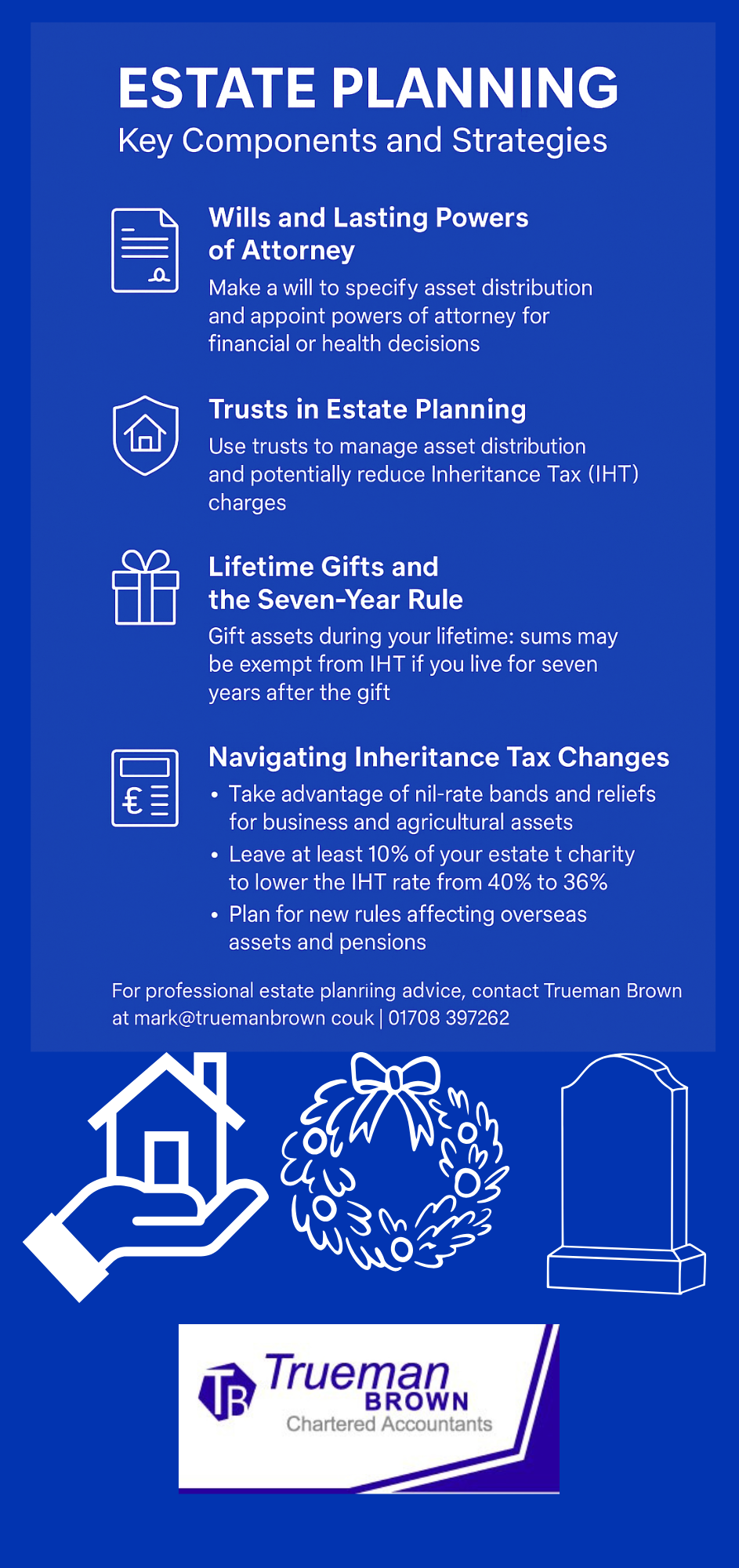
Wills and Lasting Powers of Attorney
A well-drafted will is the cornerstone of a sound estate planning strategy. It sets out who will inherit your assets, who will care for minor children and how your estate should be administered.
A Lasting Power of Attorney (LPA) enables someone you trust to make decisions about your finances or health if you cannot do so yourself, which is another vital element of estate planning.
Trusts in Estate Planning
Trusts are a powerful tool in estate planning to control how and when beneficiaries receive assets.
Depending on your circumstances, a trust may help reduce Inheritance Tax (IHT) charges and protect wealth for future generations.
However, rules for trusts — including 10-year periodic charges and exit charges — require careful structuring to avoid unintended tax consequences.
Lifetime Gifts and the Seven-Year Rule
Making gifts during your lifetime can be an effective way to reduce the value of your estate for IHT purposes.
Gifts are usually exempt from IHT if you survive for at least seven years after giving them — known as the “seven-year rule.”
Navigating Inheritance Tax Changes in Your Estate Planning
Inheritance Tax Thresholds and Reliefs
For the 2025/26 tax year, the standard Inheritance Tax nil-rate band remains at £325,000, with an additional residence nil-rate band of £175,000 available when you leave your home to direct descendants.
Thresholds remain frozen, meaning rising property values can push more estates into liability without proactive estate planning.
Changes Impacting Estate Planning
Recent changes in UK tax policy affect estate planning strategies:
-
Long-term UK residents: From April 2025, long-term UK residents may face IHT on overseas assets.
-
Trust anti-avoidance measures: New measures affecting trust exit charges and gifts to charities take effect from late 2025 and into 2026.
-
Agricultural and Business Property Relief: From April 2026, BPR and APR reliefs are restricted to a combined £1 million at 100 % relief; anything above this may receive reduced relief.
-
Pensions and IHT: From April 2027, many unused pension funds will be included in IHT calculations unless properly planned for, which has significant implications for estate planning.
Practical Estate Planning Strategies
Use of Charitable Gifts
By leaving at least 10 % of your estate to charity in your will, beneficiaries may benefit from a reduced IHT rate of 36 % instead of the standard 40 %.
This technique can form part of a thoughtful estate planning strategy.
Business and Agricultural Assets
If you own a family business or agricultural property, careful estate planning is critical to make the most of reliefs such as Business Property Relief (BPR) and Agricultural Property Relief (APR).
Changes to how these reliefs work from 2026 highlight the importance of acting early and structuring assets appropriately.
How Trueman Brown Can Help With Your Estate Planning
At Trueman Brown, we specialise in guiding clients through every stage of estate planning — taking account of the latest 2025/26 rules and future changes.
Whether you’re starting from scratch or reviewing an existing plan, we can help you:
-
Assess your estate and potential tax liabilities.
-
Prepare wills, trusts and powers of attorney tailored to your goals.
-
Advise on lifetime gifting strategies and trust planning to manage IHT.
-
Navigate complex rules around pensions, business assets, overseas estates and reliefs.
-
Keep your plan up to date with legislative changes.
If you’d like professional support with your planning, please contact Mark at Trueman Brown —
📧 mark@truemanbrown.co.uk
📞 01708 397262
Our experienced advisers will work with you to build an estate planning strategy that protects your legacy and provides peace of mind.
Estate Planning FAQs
Q: What happens if I die without estate planning?
If you die without a will, your estate will be distributed according to intestacy rules, which may not reflect your wishes and could increase tax liabilities.
Q: How often should I review my estate plan?
You should review your estate plan after major life events (e.g., marriage, births, divorce, business sale) or when tax laws change.
Q: Will trusts always save Inheritance Tax?
Trusts can reduce IHT in many circumstances, but they must be properly structured. Trusts can also attract periodic charges and other tax implications.
Q: Are pensions included in estate planning for tax?
From April 2027 many unused pensions will be included in IHT unless structured appropriately — early planning is essential.
Q: Can I make gifts now to reduce future IHT?
Yes — gifts can reduce the value of your estate for IHT, especially if you survive seven years after the gift.
Recent Comments