
Can you benefit from the marriage allowance?
If you’re married or in a civil partnership, you may be able to reduce your household tax bill by claiming the marriage allowance.
This is a simple tax relief that allows one partner to transfer part of their unused personal tax-free allowance to the other — potentially saving up to £252 in 2025/26.
What is the marriage allowance?
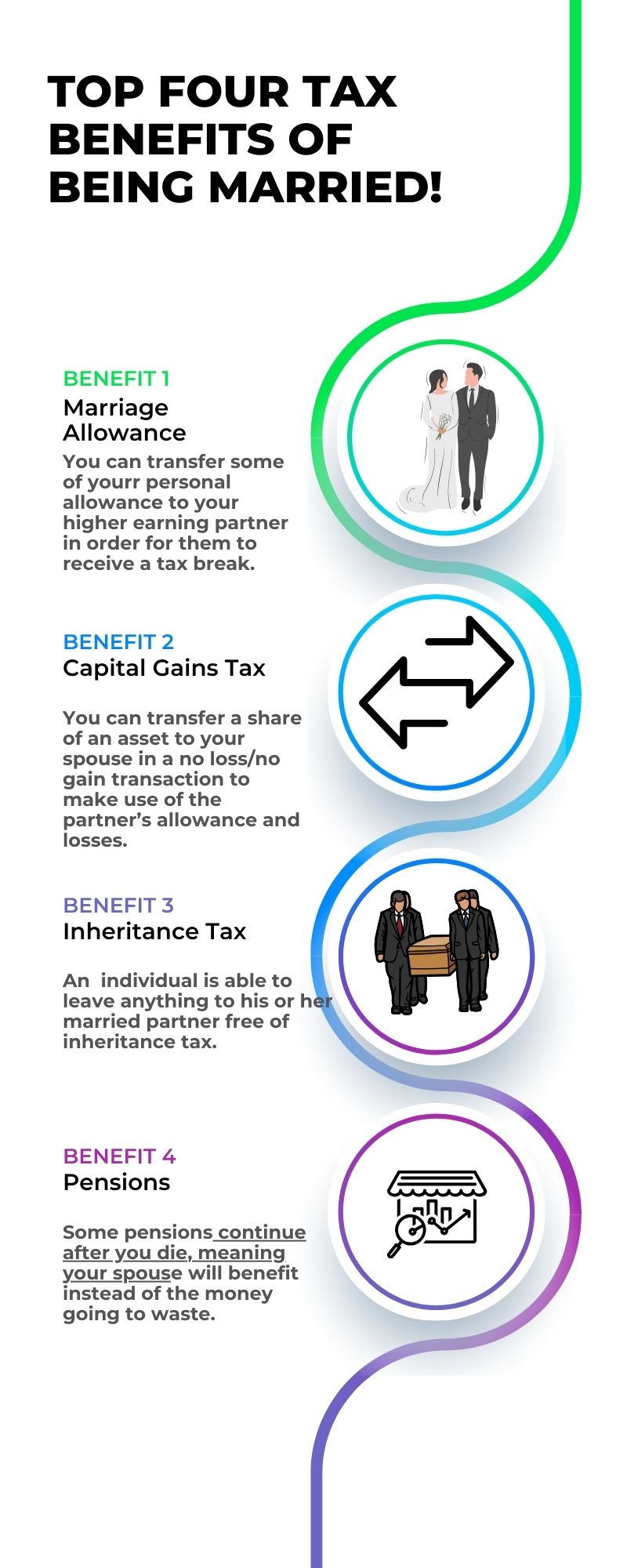
The marriage allowance (sometimes called the “marriage tax allowance”) enables a husband, wife or civil partner — where one earns less than the personal allowance — to transfer up to £1,260 of their tax-free personal allowance to their spouse or civil partner.
Because the standard personal allowance for 2025/26 is £12,570, any partner earning below that amount may not be using their full allowance.
By transferring £1,260, the higher–earner receives a tax reduction, typically reducing their income tax by up to £252 in the current tax year (6 April to 5 April).
This makes the marriage allowance a useful (and often overlooked) way for couples to ensure their household pays as little tax as possible — without changing jobs, salaries or financial arrangements.
Who is eligible for marriage allowance?
To claim the marriage allowance in 2025/26, all the following conditions must be true:
-
You are married or in a civil partnership.
-
One partner (the “donor”) has an income below the personal allowance threshold of £12,570.
- The other partner (the “recipient”) pays tax at the basic rate — typically their income before the allowance is between £12,571 and £50,270.
-
Both partners are not higher- or additional-rate taxpayers, as the allowance is only available when the recipient is taxed at the basic rate.
If these conditions are met, the lower-earning partner can transfer £1,260 of their personal allowance to the higher-earning partner, which reduces the couple’s overall tax bill.
How much could you save with marriage allowance?
By using the marriage allowance in 2025/26, the maximum saving is £252.
Claiming marriage allowance isn’t just for this year — couples can also backdate a claim for up to four previous tax years (assuming they were eligible in those years). That means if you haven’t claimed before, you might receive a refund covering several years.
For many households, especially where one partner works part-time, is studying, retired, or receiving lower income for any reason — the total benefit over multiple years can be meaningful.
When marriage allowance might not be beneficial
While marriage allowance offers savings for many couples, it’s not always the right choice. For example:
-
If the lower-earning partner’s income rises above the personal allowance threshold (£12,570), they may no longer be eligible to transfer their allowance.
-
If the higher-earning partner becomes a higher- or additional-rate taxpayer (i.e. their income before allowance exceeds the basic-rate cap), the benefit disappears.
-
If your circumstances change — for example separation, civil partner death, or large income changes — you may need to cancel the allowance.
It’s also worth reviewing other tax allowances (e.g. savings allowance, pension contributions, or reliefs) to ensure the couple’s overall tax position remains optimal.
How to apply for marriage allowance
Applying for the marriage allowance is straightforward. The lower-earning partner (the donor) must make the claim. Applications can be done online via the official government portal (on GOV.UK.
You will need:
-
Both partners’ National Insurance numbers
-
Proof of identity (passport, driving licence or similar) for the claimant
Once approved, the transfer stays in place automatically for subsequent tax years — unless cancelled. For past years, you may receive a refund cheque or payment, depending on how you filed previously.
This makes claiming the marriage allowance a “set and forget” form of tax relief — efficient and low-effort, yet potentially beneficial.
Claims for the allowance can also be made through Self Assessment or by completing the marriage allowance Form MATCF and sending it to the address on the form.
How Trueman Brown can help
If you’re unsure whether claiming the marriage allowance is right for you — or how to apply — the team at Trueman Brown can guide you through it.
Whether you want a simple eligibility check, help completing the online application, or advice on how it interacts with other tax allowances, we’re here to assist.
Get in touch with us at mark@truemanbrown.co.uk or call 01708 397262 for a free, no-obligation discussion.
We can also help amend previous tax returns if needed, and advise on tax planning to make the most of allowances available in 2025/26.
Frequently Asked Questions (FAQ)
Q: What is the maximum you can transfer under marriage allowance?
A: For 2025/26, the maximum transferable amount is £1,260.
Q: How much tax could I save?
A: The tax saving is typically £252 per year (20% of £1,260).
Q: Can we backdate a claim if we didn’t apply before?
A: Yes — you can backdate a marriage allowance claim up to four tax years (subject to eligibility during those years).
Q: What happens if our income changes and one of us is no longer eligible?
A: If the donor’s income rises above the personal allowance, or the recipient becomes a higher-rate taxpayer, you must cancel the claim; continuing it could lead to extra tax being payable.
Q: Do unmarried couples living together qualify for marriage allowance?
A: No — the marriage allowance is only available to legally married couples or civil partners, not cohabiting partners.
Recent Comments